Abstract
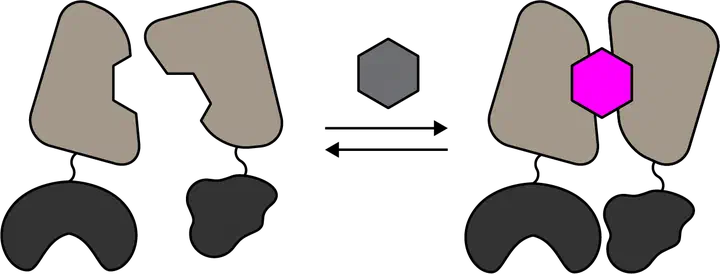
Many cellular processes are regulated through the conditional association of existing proteins, motivating methods that provide precise spatial control over protein proximity. Controlling and imaging protein proximity in living cells has traditionally relied on separate tools: chemical actuators to induce protein interactions and fluorescent reporters to monitor protein proximity. Chemically induced proximity (CIP) achieves this by using small molecules to conditionally recruit one protein to another. Here, we review the evolution of CIP strategies from non-covalent to covalent and hybrid systems, and discuss recent scaffold designs that combine proximity induction and optical reporting within a single molecular scaffold. These advances establish modern CIP scaffolds as unified platforms for simultaneously controlling and imaging protein interactions.

Mousumi Baruah
NPDF Postdoc

Hassan Rasiwala
Graduate Student

Uma Vaidya
Graduate Student